Showing posts with label Gene Wilder. Show all posts

Wednesday, March 4, 2015

The Director's Oeuvre: Mel Brooks - Young Frankenstein

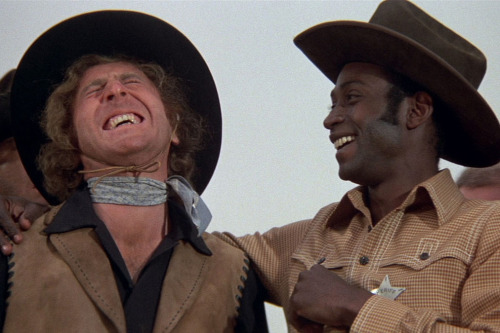
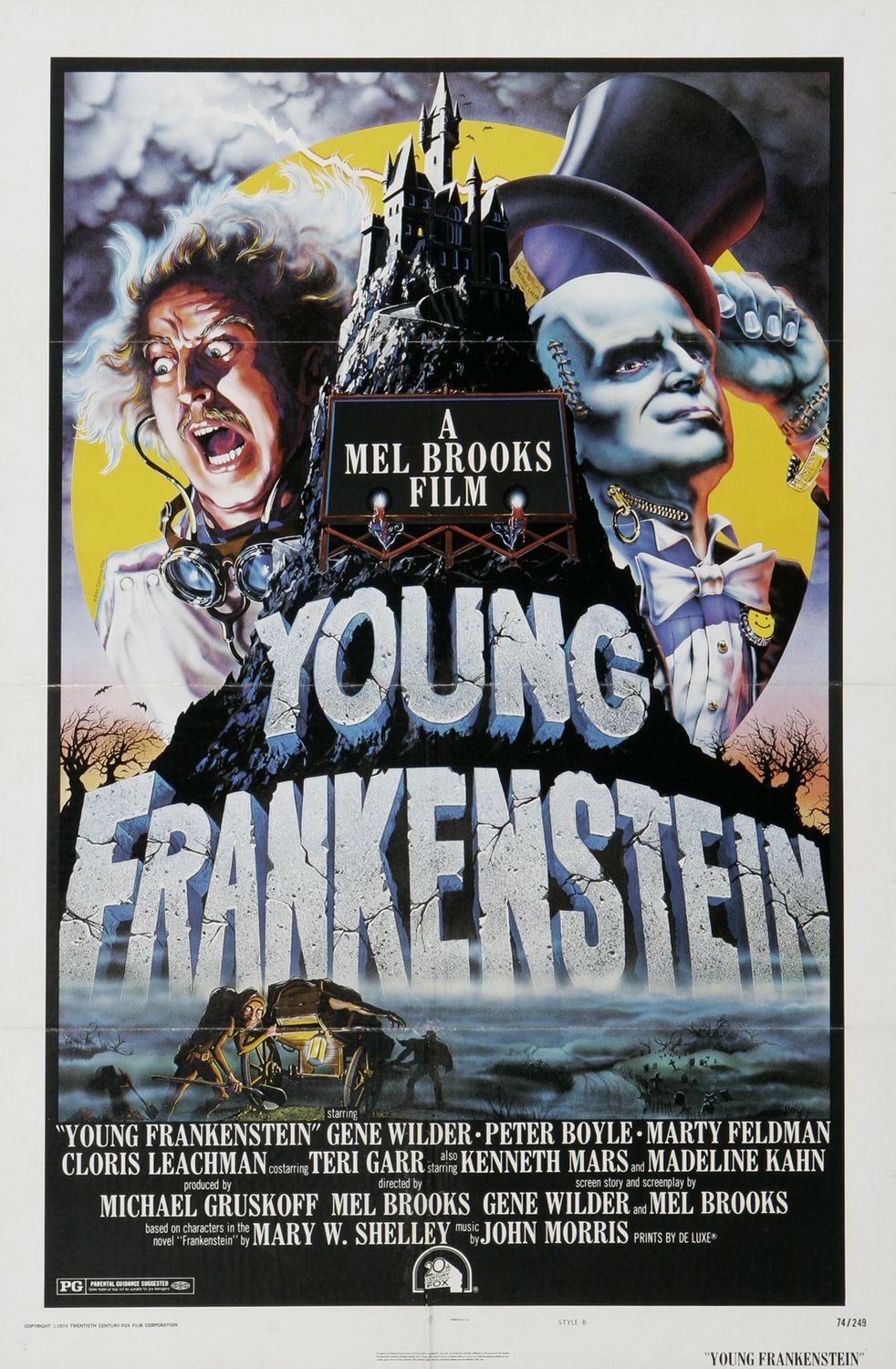
1974 was a good year for Mel Brooks.  By this point, he was essentially a household name and a staple in American comedy.  In February, he released his western classic 'Blazing Saddles' and a mere 10 months later, he was back in theaters with what many would deem another classic, 'Young Frankenstein.'

This macabre tale is that of Dr. Frederick Frankenstein (pronounced Fronkenshteen), a physician, lecturer, and direct descendent of the legendary Dr. Henry Frankenstein.  He has made a reputable career for himself in the scientific community but is unable to escape the shadow of his infamous ancestry for which he has nothing but contempt.  His life is turned upside down when he inherits his family's estate in Transylvania.  With the help of a loyal assistant, Igor and a busty handmaiden named Inga, Dr. Frankenstein confronts the mysteries of his past and attempts to finish his grandfather's work.

Gene Wilder throws himself into the role of Dr. Frankenstein in a way we haven't seen before.  His manner is that of someone truly mad, struggling to keep himself in check.  His fear that he is just as mad as his grandfather is always present in his performance though never expressly stated.  His raw frustration and fury bubbles under the surface, eating away at him.  What we get is an explosive, bipolar performance.  But is that necessarily a good thing?  While this ferocity may work for a horror film or drama, comedy demands a straight man, someone to take the brunt of the craziness around him.  Wilder is conflictive with his own creation.  He wants to act as both the exasperated straight man AND the bombastic mad genius and its hard to latch onto both.

Marty Feldman and his iconic eyes plays the hunchbacked Igor (pronounced Eye-gor).  Like Frederick, he too is a descendant of the character we all know.  Bug-eyed expression and warm dimwittedness carries him a long way.  He succeeds in the role despite the jokes he's forced to deliver.  More on that later.  Teri Garr plays Inga, a well-endowed personal assistant concerned for the good Doctor but equally curious and loyal to a fault.  The three of them work together as a team infinitely better than Bender and Vorobyaninov ever did 'The Twelve Chairs.' All three of them share great chemistry.

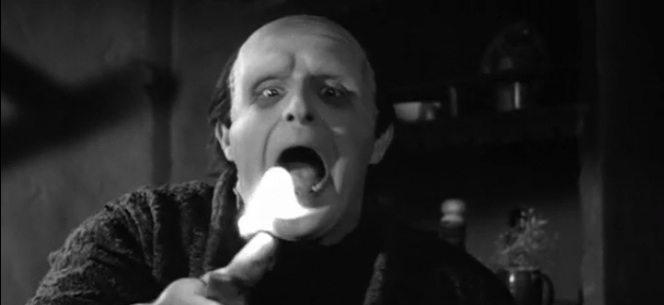
The late Peter Boyle plays The Monster (that's right, not Frankenstein, the Monster) and he is fantastic.  He plays the part, as all great Frankenstein's Monsters do, with a childlike understanding of a cruel and unforgiving world.  Despite being buried in prosthetics, Boyle has a remarkably expressive face that endears us to him.


Chloris Leachman has a small part as Frau Blücher, a housekeeper so horrifying that the very mention of her name is enough to frighten the horses.  Kenneth Mars plays Inspector Kemp, a one-armed policeman torn between wanting to maintain law and order in his community and wanting to get a good ol' fashioned riot going.  Madeline Kahn also appears briefly as a vain socialite who just won't put out.  She's barely in the movie but she makes the most out of every minute.

Young Frankenstein is Mel Brooks' most technically accomplished film to date.  While The Producers just told a comedic story and Blazing Saddles skewered westerns, Young Frankenstein has a far more specific target in its crosshairs, namely the Universal Horror Films, 'Frankenstein' and to a lesser extent, 'The Bride of Frankenstein.'  The cinematography by Gerald Hischfeld, production design by Dale Hennesy, and score by John Morris are all impressive the same way Tim Burton's 'Ed Wood' was.  However, I would hesitate to call it a classic, or even a wholly successful work.

Pacing wise, this movie is abysmal.  I was watching this film with a friend and we hadn't even gotten past the title sequence before my friend muttered, "these are going on forever."  She wasn't wrong.  The opening credits are simply names and crew positions superimposed over a shot of a looming castle while slow violin music plays.  The whole experience is reminiscent of 'Frankenstein' and films of that ilk but one thing those movies were not is funny.  In general, that is Young Frankenstein's greatest problem.  It mirrors the style of the horror film without countering with the timing of a comedy.  Not every joke in Blazing Saddles lands, but it is throwing a joke at you every 10 seconds.  The jokes in Young Frankenstein are far too infrequent and when they do appear they are hit and miss.

Wilder wrote the screenplay with Mel Brooks adding support and its painfully apparent.  That's not to say that there aren't good jokes, there are, but there are just as many clunkers that have no business being in this film.  At one point Gene Wilder arrives at a train station in Transylvania.  Despite the fact that the conductor has just told us that we have arrived in Transylvania, Wilder leans out the window to a passing Shoeshine boy and asks, "Pardon me, boy.  Is this the Transylvania station?"  The boy responds "Ja, ja.  Track 29."  He turns away before asking, "Hey, can I give you a shine?"  "No thank you" says Wilder.  Hilarious.  For those of you who are totally lost, "Track 29. Can I give you a shine?"  are lyrics from the 1941 song "Chattanooga Choo Choo."  First off, this is a stupid joke.  Second, it doesn't make any sense other than making the audience say "we know those lyrics."  And third, it steps over the REAL joke which is that Wilder was able to get to Transylvania by train.

Brooks is also far too fond of 'looking at the camera' humor.  9 times out of 10, its just Brooks explaining jokes to the audience.  "We must accept our failures with quiet dignity and grace" sighs Frankenstein before he throws a tantrum and cries.  Igor looks at the audience.  "Quiet dignity and grace."  He rolls his eyes.  "GET IT?!" shouts Brooks off camera.  "He didn't accept the situation with dignity and grace!"  Yes Mel.  We get it.


Once the Monster rises from his metal slab, the script picks up with its jokes.  It suddenly has purpose and direction.  One slapstick scene with the Monster and a generous Blind Hermit is particularly effective.  But at the same time, some elements of the story, like The Monster meeting a little girl by a well, are riffing on the 1931 film so specifically that I can't imagine they'd be anything other than chuckleworthy for an unfamiliar audience.  The scene serves no other purpose but to make fun of its predecessor scene by scene and in doing so, fails to work as its own narrative.  I'm not sure why this is viewed as a classic.  It's nowhere near as funny as The Producers or Blazing Saddles.  It is a well made visually but I've never known the average moviegoer to say "you should see this movie Young Frankenstein, the cinematography is Uh-May-Zing!"  That being said, there is more than enough in this movie to recommend.

Following the success of The Producers: the Musical, Brooks and company tried to milk that prized heifer again and turned Young Frankenstein into a Broadway Musical.  The show received mixed reviews and faded from the public consciousness.  Don't worry guys, we'll always have Transylvania.


Gene Wilder has gone on record saying that this is his favorite film he's ever been involved with.  I feel bad for the poor man.  He doesn't know how good 'Will Wonka and the Chocolate Factory' is.

Friday, February 27, 2015

The Director's Oeuvre: Mel Brooks - Blazing Saddles

In every sense, 'Blazing Saddles' feels like the movie Mel Brooks should have made after 'The Producers.'  With newfound confidence in his script, a strong cast, and a bigger budget, Brooks swings for the fences with this satirical western that shocks as often as it enthralls.


The story is about Bart, a black railroad worker who is appointed Sheriff of the small hick town of Rock Ridge by a conniving State Attorney General with hopes that he will insight unrest and run out the townspeople so he can buy the land cheap and build a railroad.  Its honestly not as complicated as it reads.

Cleavon Little plays Bart and he is as charming, charismatic, and likable as can be.  He takes the town's racism with good cheer and a smile that says "I get it. You're all bigots. And that's just the way things are."  The role requires someone eternally hopeful in a hopeless situation and Little absolutely nails it.

While the movie starts off a little rocky, one-note, and goofy for goofy's sake, the story picks up quite a bit when Gene Wilder appears as Jim, the fastest, drunkest hands in the West.  Wilder is effortlessly funny and his unassuming mug makes his speed all the more surprising.  The camaraderie between Jim and Bart is one of the highlights of the movie.


Madeline Kahn is decent as Lili Von Shtupp.  I honestly can't tell if she's trying or not.  She does get some classic one-liners in though.  "They're always coming and going and going and coming and always too soon."  I must confess that my disappointment in her role is entirely on me.  Lili is constantly referred to as one of the great comedy characters and I'm not sure why.  She's not as big a part as history would like to remember.  She's just another adversary for Bart to convert, nothing special.  I just hope you think that lisp humor is hiwawious.

But the real star of the movie is Harvey Korman as Hedey, sorry, Hedley Lamarr.  He plays the conniving State Attorney General who is continually frustrated by Bart's success in Rock Ridge.  His seething anger and dastardly villainy is a thing of wonder.


Mel Brooks is the weakest part of the movie as a cross-eyed moron, Governor William J Lepetomane, a role that exists solely so Brooks can have a part in his own movie.  I wonder if his check from the paddleball people cleared.

I can't stress how shocking this movie is.  The original title of the film was 'TEX X', "dock that chink a day's pay for nappin' on the job!" is one of the opening lines of the film, and the use of the N-word alone would make Quentin Tarantino blush.  There is a boldness present we haven't seen from Brooks before.  And yet, the film is more than just a shock fest/satire of Western tropes.  Its also a pointed criticism about the way minorities of all sorts were exploited, including African Americans, Asian Americans, Native Americans, and large-breasted secretaries.


The Looney Tunes humor feels a little tacked on, as though they didn't know what joke to put there but they knew they had to have one.  But this movie is shooting from the hip with a new joke or gag every 10 seconds.  If one of them doesn't work, and many of them don't, there will be a new one shortly.

The last act of the movie pushes meta humor, an element that will define Mel Brooks' career, to its limits with a twist so extreme even M Night Shyamalan wouldn't dare try it.  I won't spoil it here.  I'm sure at the time this was an unparalleled example of self-referential comedy but it goes on far too long as though Brooks made a list of every gag he could think of and then filmed them regardless of how long funny it was.

A recurring element in Mel Brooks' filmography is that even if you haven't seen his stuff, you've seen it referenced.  This holds true for Blazing Saddles more than any other film in his career thus far, and for good reason.  It's just that funny.

Tuesday, February 17, 2015

The Director's Oeuvre: Mel Brooks - The Producers (1967)

A few friends and I started a club as a means of keeping in touch. One of us will choose a director and together we'll go through that director's films one at a time and talk about them. Currently, we're going through the career of comedy legend, Mel Brooks, and what better place to start than with his first film, 'The Producers.'


The Producers serves as Mel Brooks' debut and what a debut it is. While most people think of Brooks as a parodist, there was a period, however briefly when he made comedies that worked as their own movies.

The story is absolute genius. A once-great producer MAX BIALYSTOCK teams up with a nebbish accountant LEO BLOOM with a cockamamie scheme, namely that if they raise a ludicrous amount of money and they put on a guaranteed flop, they could abscond with the leftover money and retire as millionaires. From a comedic standpoint, this plot is filled to bursting with hilarious opportunities and for the most part, The Producers makes the most out of them.

Zero Mostel plays Max Bialystock and while many know him as Tevye from Fiddler on the Roof, this was the role he was born to play. He's delightfully repugnant as one of the failed giants of his craft. How low does he go? The film begins with him selling his body to little, horny old ladies for "checkies," his sweaty combover barely keeping up with him as he runs from one geriatric tryst to the next.

Gene Wilder has his breakout performance as Leo Bloom, a spineless accountant with a propensity for panic attacks and a slavish devotion to his security blanket. Its his clever hypothetical accounting theory that lays out the plot but its Max Bialystock's desperation, at one point reaching his hands to the heavens and shouting "LORD, I WANT THAT MONEY!" that sets the story into motion. Wilder and Mostel make one hell of a team in this movie and their chemistry is off the charts.

The two set out to find the worst play ever written and they strike gold in "SPRINGTIME FOR HITLER", a concept so audacious, you already know about it by reputation. The author of this masterpiece is Franz Liebkind played by Kenneth Mars, as a Nazi and Hitler devotee who escaped the war and immigrated to the US of A. Play in hand, Bialystock and Bloom assemble the crew for their theatrical catastrophe, including a flamboyantly gay director, Joel Schumacher before Joel Schumacher, Roger De Bris. His utter creative bankruptcy is one of the consistent laughs throughout the film.

The only sour note is Dick Shawn as Lorenzo St. DuBois or LSD for short (get it?). He's a beatnik so terrible he just has to be right. However, he is representative of all the problems I have with the second act.

WARNING! HERE BE SPOILERS!


After LSD joins the cast, the pacing goes down the tubes, the slowest moment being LSD's musical number "Love Power" which is so boring and drawn out that it is completely absent from the Broadway Musical. Indeed, Lorenzo's character has been excised entirely.

The play opens to everyone's predictable outrage with Wilder and Mostel exiting before any of the angry patrons. They leave a hair too early though because as soon as LSD sets foot on stage, his hippy portrayal of the mustachioed dictator has the audience in (unbelievable) stitches. This is where I am going to disagree with people but I firmly believe that the scenes in the theater threaten to destroy the movie entirely. Why? Because the manner in which the play is presented makes no sense. "Oh shush, Lukas. It's a comedy." you say. But the core concept is flawed. Roger DeBris intends to make a sincere, dramatic work. His problem is that he's such a poor director that even when he intends to be serious, he falls back on his tired, old, and lets not be coy about it, gay clichés. But what I don't understand is how LSD made it all the way to opening night with that performance accepted by DeBris and with the Kraut being none-the-wiser. LSD is terrible, undoubtedly, but he's too terrible.

Some will say that I'm overanalyzing a simple joke, but allow me to point you to the remake, which is almost word for word the original film, but with musical numbers and a dramatically restructured second act. As mentioned before, in the musical there is no LSD. Leibkind is cast as his beloved Führer and intends to play the role with all the sincerity he can muster. However, on opening night, he breaks his leg and can't go on. He is replaced last minute... by Roger DeBris! This is an ingenious change. 'Springtime For Hitler' now takes on a different satirical edge. DeBris doesn't know he's awful. His homosexuality shines through. He is utterly incapable of playing the part straight.

The rest of the musical is very similar to the movie, except for a few character changes. Leo having a secret desire to be a Broadway Producer adds some complexity and depth to an otherwise shallow role but apart from that it's basically verbatim. And why should it change? The screenplay for Mel Brooks' comedy is downright untouchable. It has a reputation for being one of those great comedies and its entirely deserved. You've heard lines from this movie without even knowing it. "Actors aren't animals? Have you ever eaten with one?!"

It is clear that Mel Brooks poured his heart and soul into this project and it really is required viewing for anyone who says they like comedy. With movies like "Young Frankenstein" and "Robin Hood: Men in Tights", Mel Brooks will become one of Hollywood's premier satirists. Its clear, even from his first film, that he has a firm grasp on the concept.